๐Ÿพ Animal Explorer

Howl-some facts for curious kids

All About Wolves ๐Ÿบ

Wolves live in families called packs. They howl to talk, travel for miles, and they're the wild cousins of every pet dog. Let's explore!

A gray wolf standing in a forest clearing, looking to the side
A gray wolf Real photo

๐Ÿ“ Wolves by the numbers

Tap a card to see how it compares to you!
๐Ÿ‘จโ€๐Ÿ‘ฉโ€๐Ÿ‘งโ€๐Ÿ‘ฆ A pack is a family

  • A wolf pack is a family: usually a mom and dad wolf and their pups from the last few years.
  • The parents are the leaders. They decide where the pack goes and when to hunt.
  • Pack members hunt together, play together, and help take care of the pups.
  • When young wolves are about 2 years old or older, some leave to find a mate and start a pack of their own.
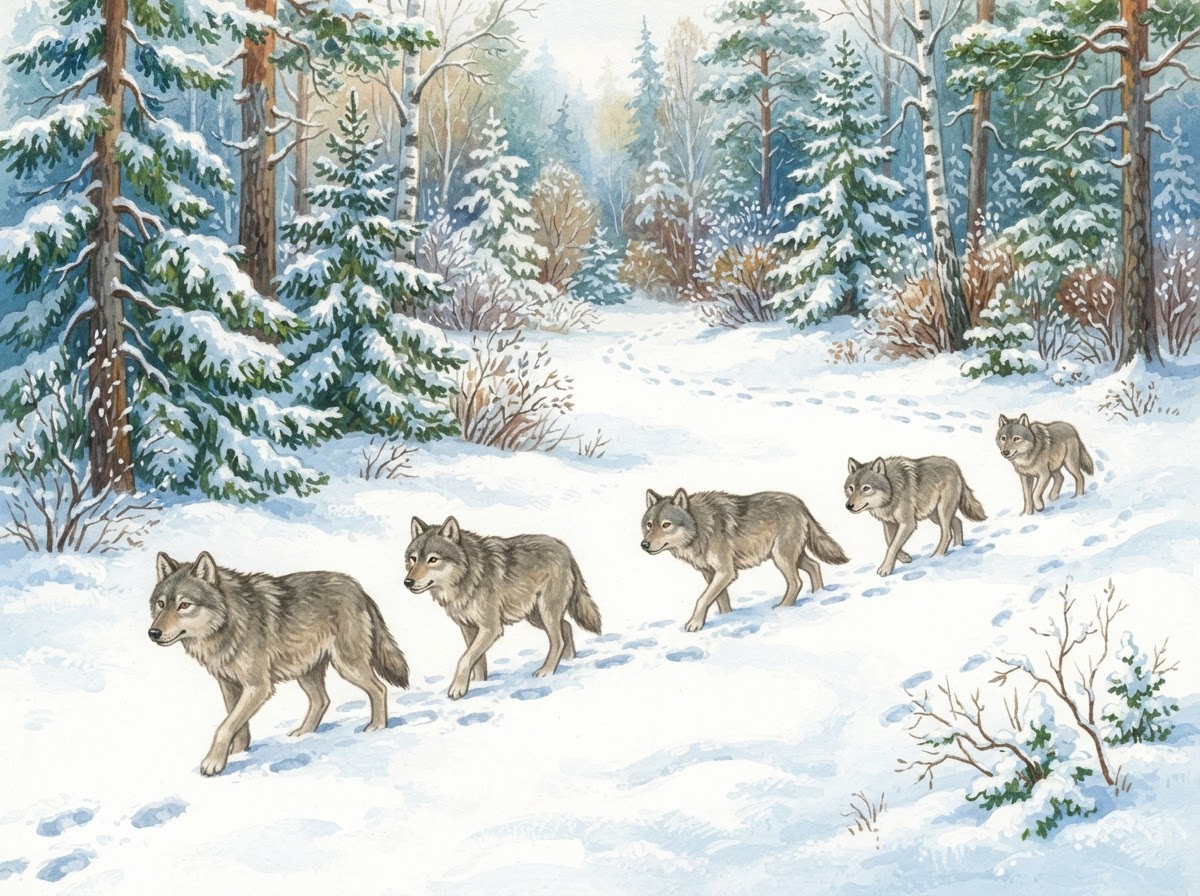
  • In deep snow, wolves often walk in a line, stepping in each other's footprints to save energy.
Illustration of six gray wolves walking in a line through deep snow
Follow the leader! AI picture

๐ŸŒ™ Why do wolves howl?

  • "Where are you?" Howling helps pack members find each other when they're far apart.
  • "This is our home!" A howl tells other packs to stay away.
  • "Let's go!" Packs often howl together before they set off to hunt.
  • Every wolf's howl sounds a little different, so family members know who is calling.

๐ŸŒ• Myth buster: Wolves don't really howl at the moon! They point their noses up so the sound travels farther.
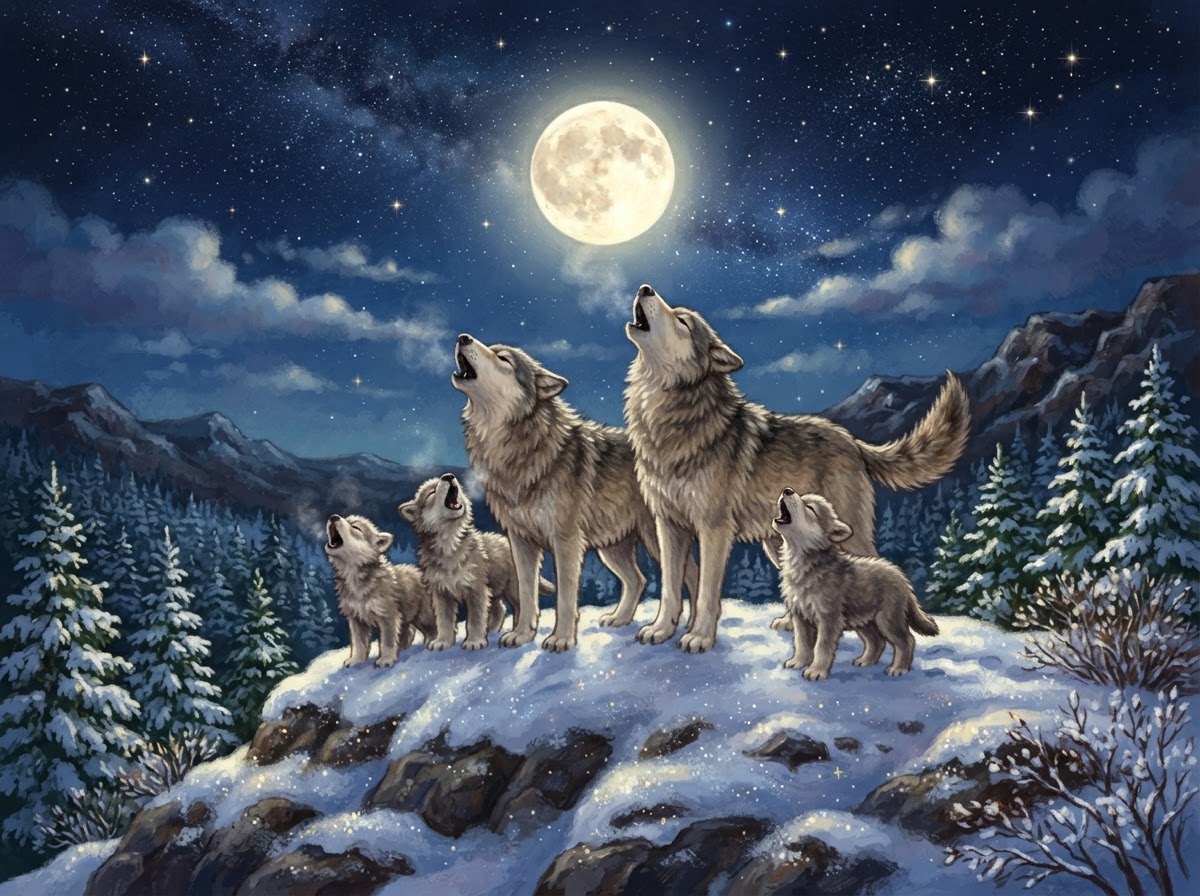
Illustration of a wolf family howling on a snowy hill under a full moon
A family howl AI picture
A black wolf standing on a big snowy rock in Yellowstone
A wolf on a snowy rock in Yellowstone Real photo

๐Ÿบ Kinds of wolves & where they live

Gray wolves live across North America, Europe and Asia: in forests, mountains, grasslands, deserts and the frozen Arctic. A few other kinds of wolves live in special places.

A gray wolf standing in a forest clearing, looking to the side

Gray wolf

The most common wolf. Its fur can be gray, black, brown or even white! Lives in forests and mountains like Yellowstone.

Real photo
A white Arctic wolf

Arctic wolf

A kind of gray wolf with white fur that blends in with the snow, far up in the icy north of Canada and Greenland.

Real photo
A Mexican gray wolf running

Mexican wolf

The smallest gray wolf in North America. It lives in the mountains of Arizona, New Mexico and Mexico.

Real photo
A red wolf with reddish-brown fur

Red wolf

One of the rarest wolves on Earth. Only a few dozen live in the wild, all in North Carolina.

Real photo
An Ethiopian wolf with red-orange fur in the mountains

Ethiopian wolf

Lives high in the mountains of Africa and mostly eats small rodents called mole-rats! It's very rare too.

Real photo
๐Ÿ‘ƒ Super noses & snowshoe feet

  • Super smell: A wolf's sense of smell is about 100 times stronger than a person's.
  • Big ears: Wolves can hear sounds from far away, even through a forest.
  • Night eyes: Wolves see well in dim light, at dawn, dusk and night.
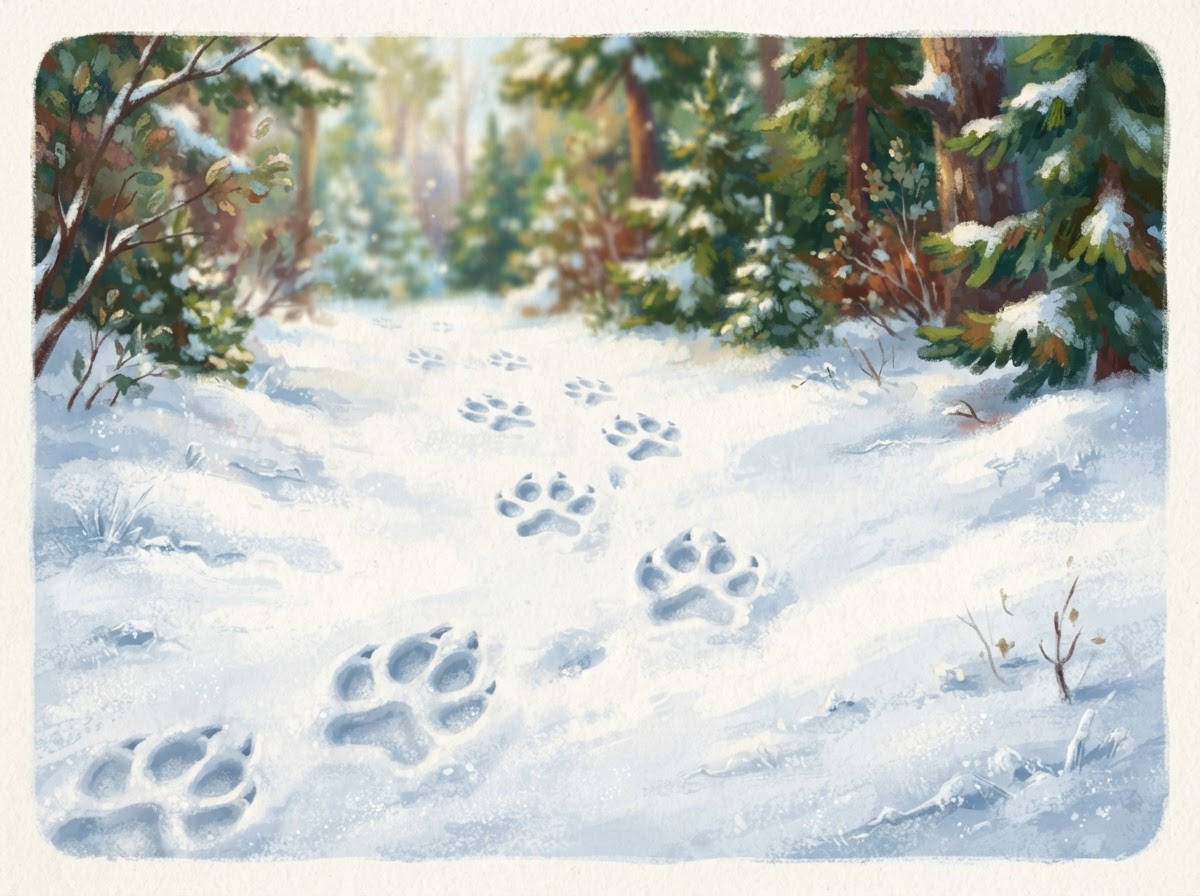
  • Snowshoe feet: Big paws spread out wide, so wolves don't sink as much in deep snow.
  • Claw marks: Wolves can't pull their claws in like cats can, so wolf tracks show claw marks. Tiger tracks don't!
Illustration of wolf paw prints leading through fresh snow
Wolf tracks in the snow AI picture

๐Ÿผ Wolf pups

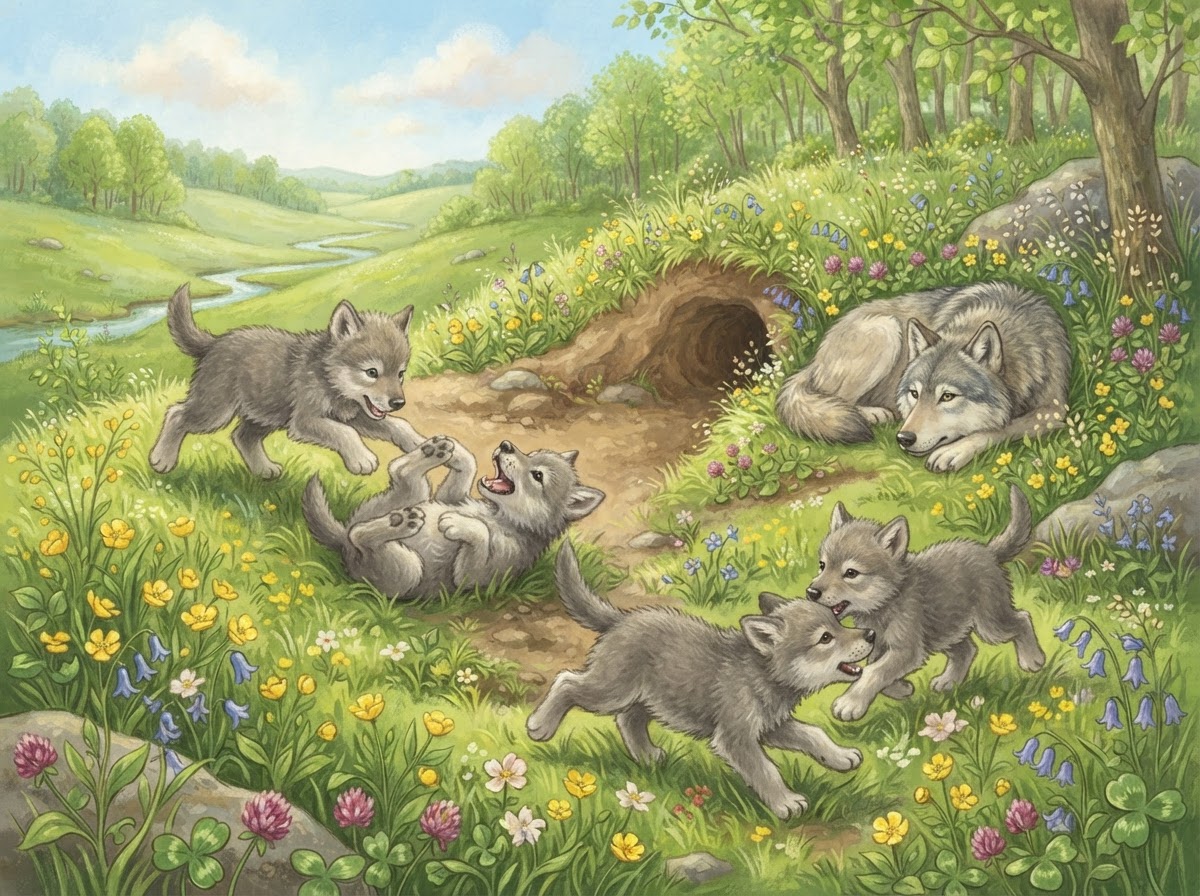
  • Wolf pups are born in spring in a den, often a tunnel dug into a hillside.
  • A wolf mom usually has about 4 to 6 pups.
  • Pups are born with their eyes closed. Their eyes open when they're about 2 weeks old.
  • All wolf pups have blue eyes at first! Later they change to gold or brown.
  • The whole pack helps: aunts, uncles and big brothers and sisters babysit and bring food.
  • Pups wrestle and chase each other. Playing teaches them to be grown-up wolves.
Illustration of wolf pups playing outside a den in a grassy hillside while their mother watches
Playtime at the den AI picture
Wild wolf pups in the grass in Yellowstone
Real wild pups in Yellowstone Real photo

๐Ÿ– What do wolves eat?

๐ŸฆŒ

Elk and deer are favorite meals.

๐ŸซŽ

Big packs can even catch moose.

๐Ÿฆซ

Wolves also eat smaller animals like beavers.

๐Ÿ–

A hungry wolf can eat about 20 pounds of food in one meal, then go days without eating.

Wolves are carnivores (meat-eaters). They hunt as a team, working together to catch animals much bigger than one wolf.

๐Ÿž๏ธ How wolves helped Yellowstone

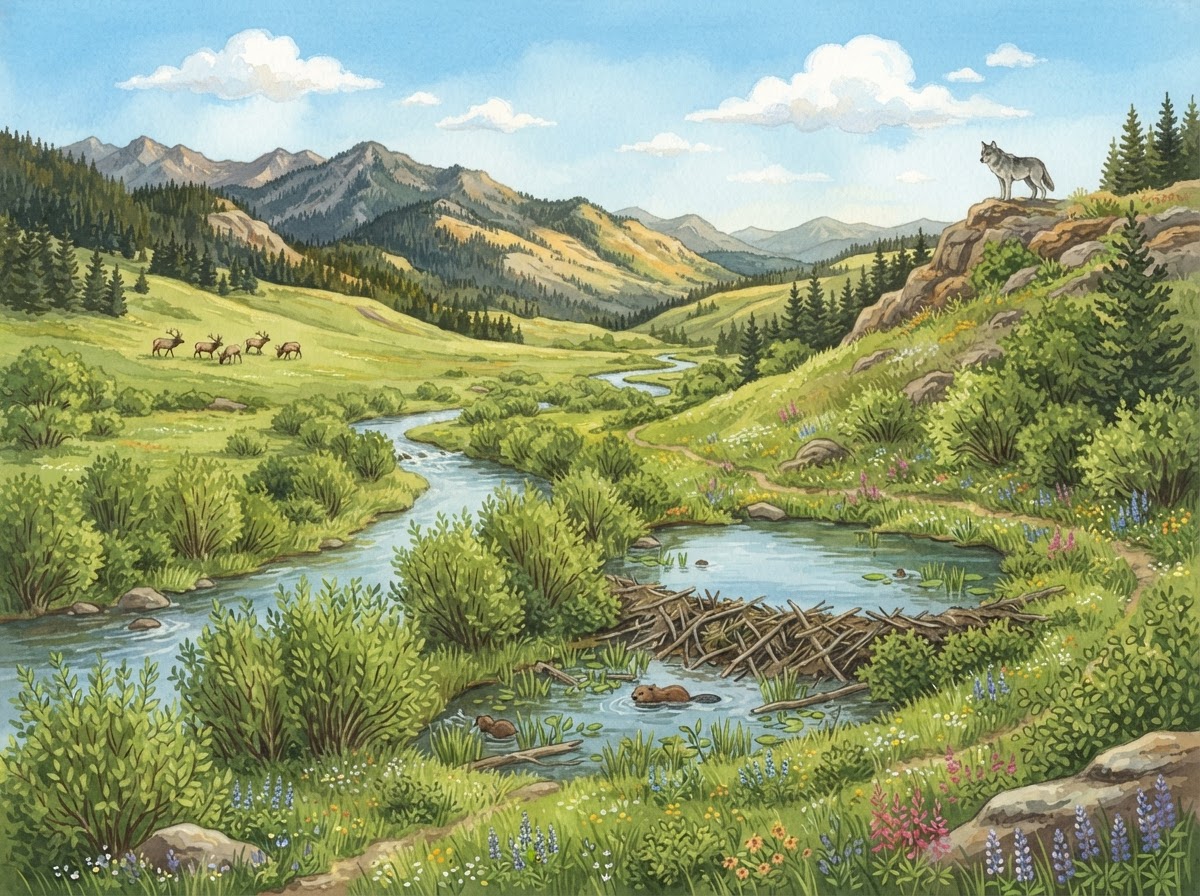
About 100 years ago, wolves disappeared from Yellowstone National Park. Without wolves, big herds of elk ate the young trees and bushes along the rivers.

In 1995, people brought 14 wolves from Canada back to Yellowstone, and more came the next year. Then something amazing happened:

  • ๐ŸฆŒ Elk started moving around more, so they didn't eat every young tree.
  • ๐ŸŒณ Willow and aspen trees grew back along some rivers.
  • ๐Ÿฆซ Beavers came back and built dams, making ponds for fish, frogs and birds.

Scientists are still studying just how much the wolves changed things, but they agree: every animal is part of the web of life.

A wolf leaping out of a wooden crate into the snow as it is released in Yellowstone
Welcome home! A wolf is released in Yellowstone Real photo
Illustration of a Yellowstone valley with a river, willow trees, a beaver dam, elk and a wolf on a ridge
Rivers, willows and beavers AI picture

๐Ÿ• Wolves and dogs are cousins

Every pet dog, from tiny chihuahuas to giant Great Danes, came from wolves a very, very long time ago. That's why dogs and wolves can both wag their tails, howl and play-bow!

But wolves are wild animals, not pets. Wild wolves are shy and usually stay far away from people. If you ever see one, stay back and enjoy it from a distance.

๐Ÿถ Think about it: What does your dog (or a dog you know) do that a wolf might do too?
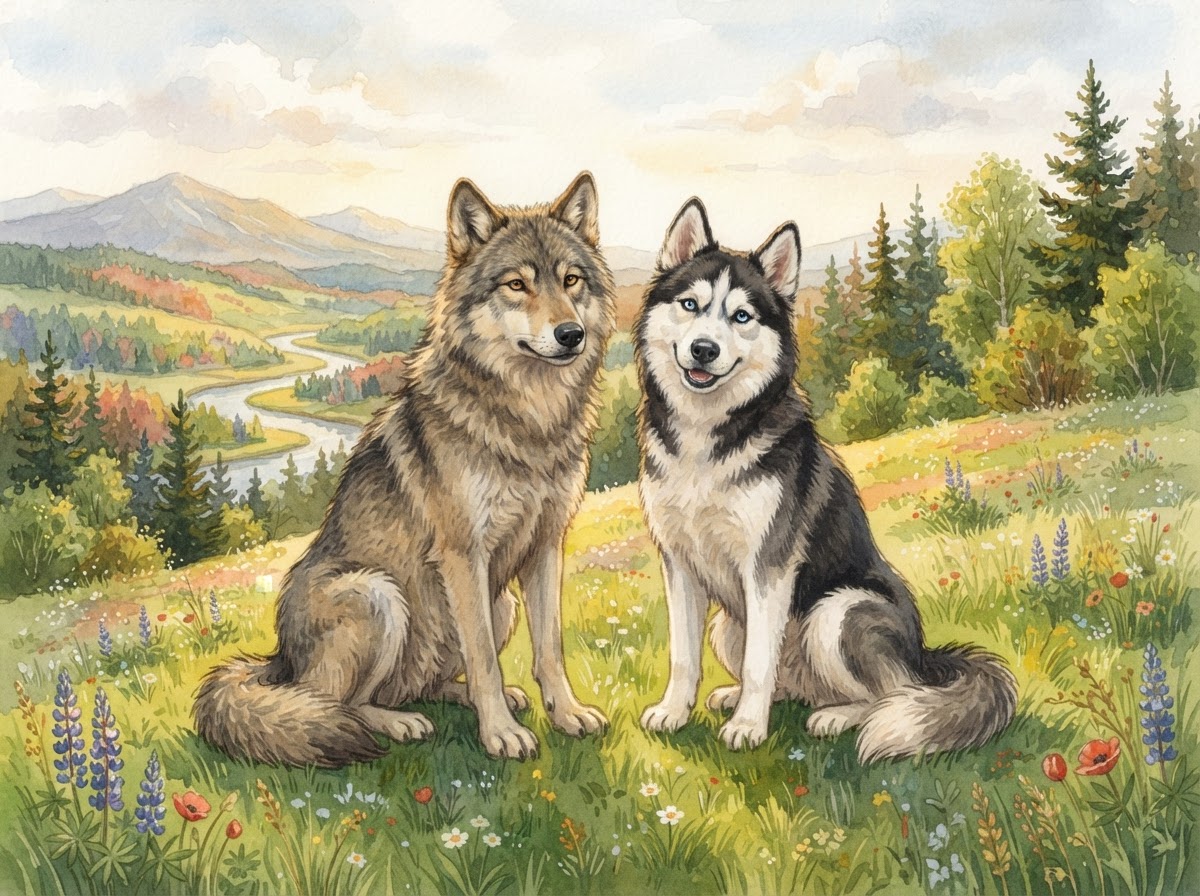
Illustration of a gray wolf and a husky dog sitting side by side on a grassy hill
Wild cousin and pet cousin AI picture

โ“ The Wolf Quiz

How much do you know? Answer the questions one at a time.

๐Ÿง™ Ask the Animal Wizard

The Animal Wizard knows all about wolves. Type a question and press Ask! Curious about a different animal?

You can ask up to 10 questions in a chat.

The Animal Wizard uses AI, so it can make mistakes. If something sounds surprising, check with a grown-up!

๐ŸŽฌ Wolf videos

Watch these with a grown-up. They open on YouTube.

๐Ÿ’š How can we help wolves?

Long ago, people thought wolves were "big and bad," and wolves almost disappeared from much of the United States. Today we know wolves are important for keeping nature healthy.

Good news: Gray wolves have come back to many places, like Yellowstone! ๐ŸŽ‰ But red wolves and Ethiopian wolves are still in danger.

  • ๐Ÿ“š Learn and share: tell someone a true wolf fact, and bust the "big bad wolf" myth.
  • ๐Ÿž๏ธ Visit national parks and follow the rules: stay far from wild animals and never feed them.
  • ๐ŸŽจ Draw a wolf family and label who's who: mom, dad, pups!
  • ๐Ÿฆฎ Be kind to dogs, the wolves' cousins who live with us.
A wild wolf trotting through deep fresh snow in Yellowstone
A wild wolf in Yellowstone Real photo