🐾 Animal Explorer

Fin-tastic facts for curious kids

All About Hammerheads 🦈

Hammerhead sharks have one of the strangest heads in the ocean! Their wide "hammer" helps them see, smell and even feel their food. Let's dive in!

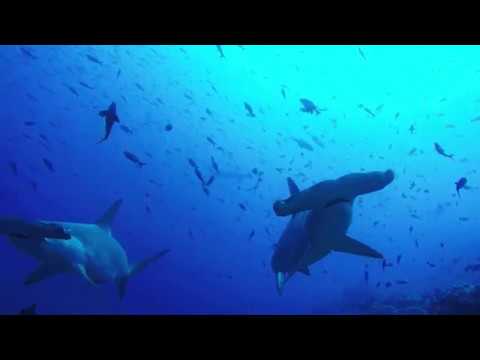
A scalloped hammerhead shark swimming in blue water near Cocos Island
A scalloped hammerhead near Cocos Island Real photo

πŸ“ Hammerheads by the numbers

Tap a card to see how it compares to you!

πŸ”¨ What's the hammer for?

  • A hammerhead's wide, flat head has a fancy name: the cephalofoil (say "SEF-uh-lo-foil").
  • The eyes sit at the tips of the hammer, so a hammerhead can look up and down at the same time and see almost all the way around.
  • The nostrils are spread far apart too, which helps them figure out which way a smell is coming from.
  • The wide head works a bit like an airplane wing, helping the shark turn quickly.

πŸ‘€ Try it: Hold your hands out wide beside your eyes. Can you see more of the room? That's a tiny bit like a hammerhead!
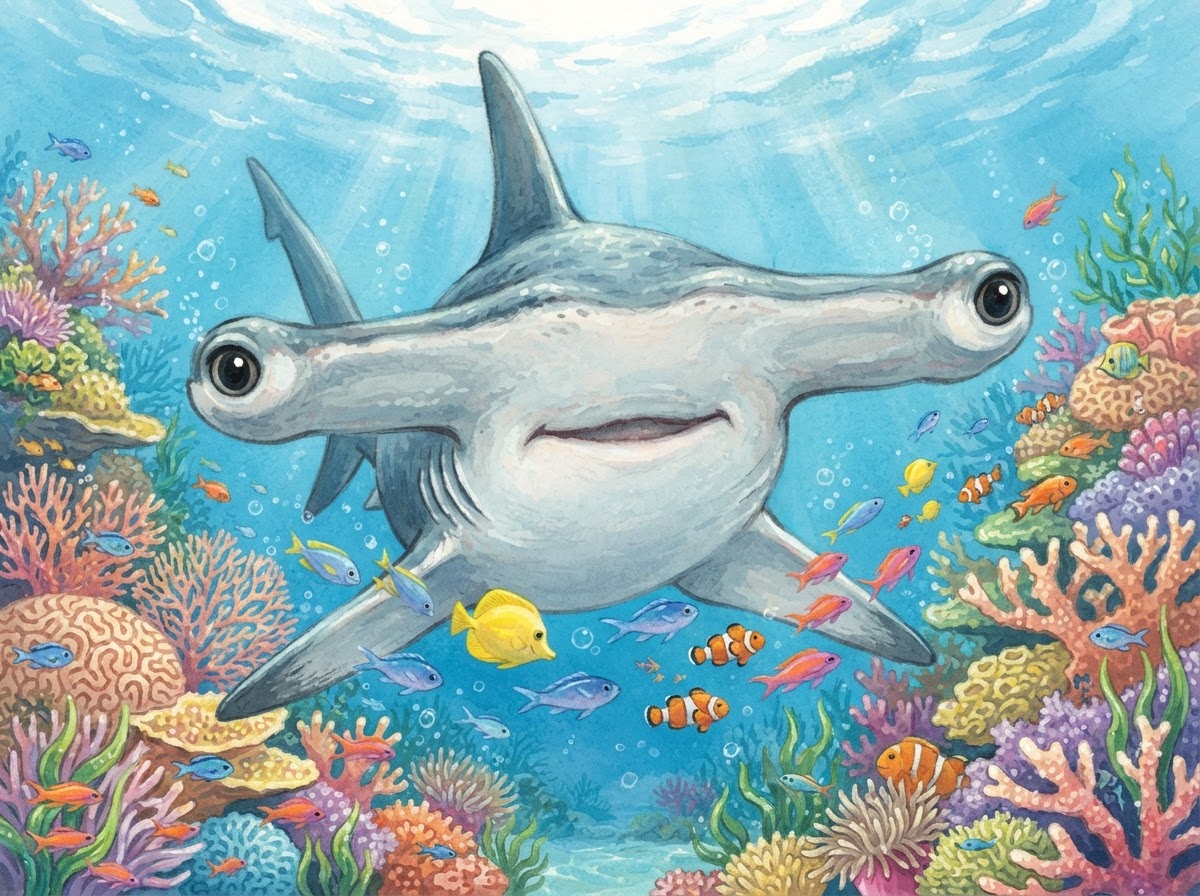
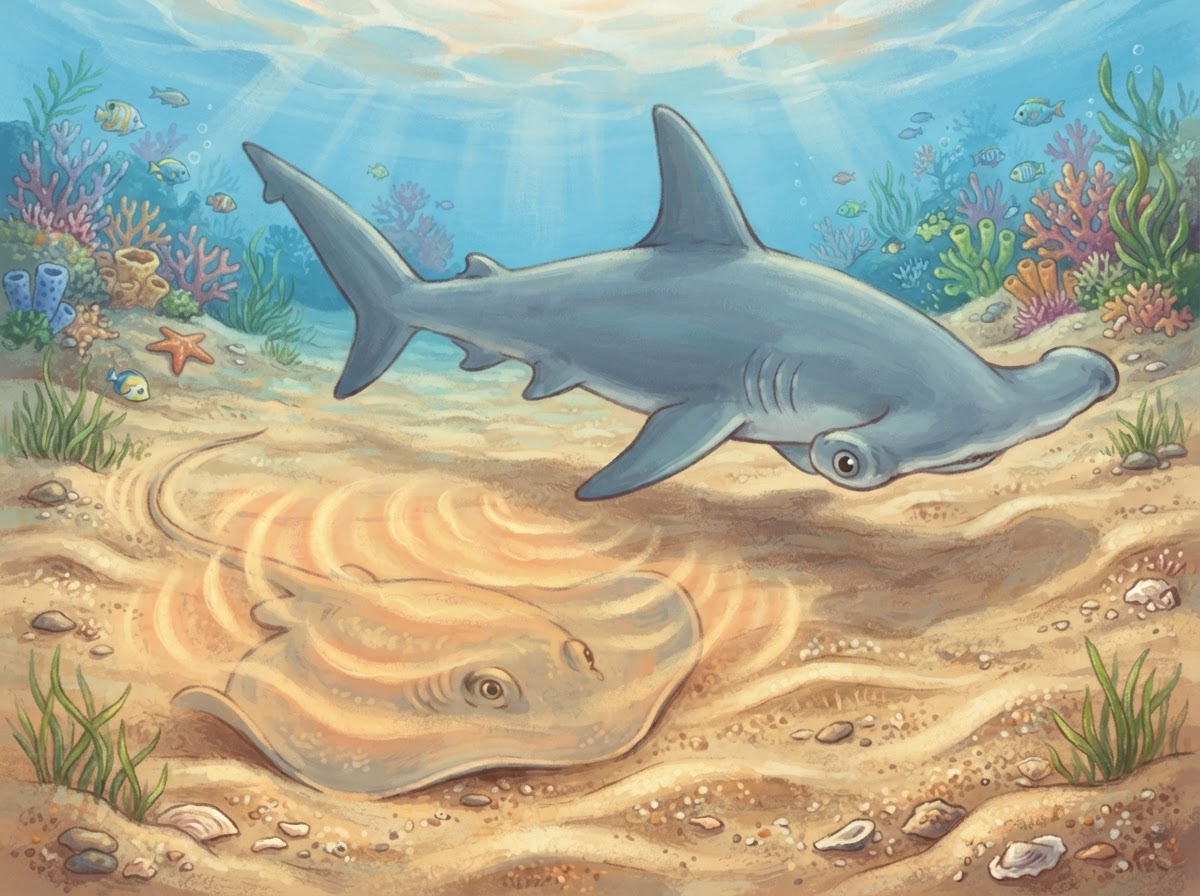
Illustration of a hammerhead shark seen from the front, with an eye at each end of its wide head
An eye at each end! AI picture

⚑ A secret electric sense

  • Every living animal gives off a tiny electric signal, much too small for people to feel.
  • A hammerhead's head is covered in little sensor spots that can feel those signals.
  • It sweeps its head over the sand like a metal detector to find stingrays hiding underneath.
  • Because its head is so wide, it has more sensors than other sharks and can search a bigger area at once.
Illustration of a hammerhead shark sweeping its head over the sand, sensing a stingray hidden underneath
Searching the sand AI picture
The wide hammer-shaped head of a great hammerhead shark seen from below
The real hammer, seen from below Real photo

🦈 Kinds of hammerheads

There are about 9 kinds of hammerhead sharks. They live in warm oceans all around the world, often near coasts and islands.

A great hammerhead shark swimming in blue water

Great hammerhead

The biggest hammerhead, up to 20 feet long, with a tall fin on its back. Its favorite food is stingrays.

Real photo
A scalloped hammerhead shark close up

Scalloped hammerhead

The front of its head has wavy bumps, like the edge of a seashell. Famous for swimming in big schools.

Real photo
A small bonnethead shark with a rounded head

Bonnethead

The smallest hammerhead, with a smooth, rounded head shaped like a shovel. It even eats plants!

Real photo
🐟 Big schools by day

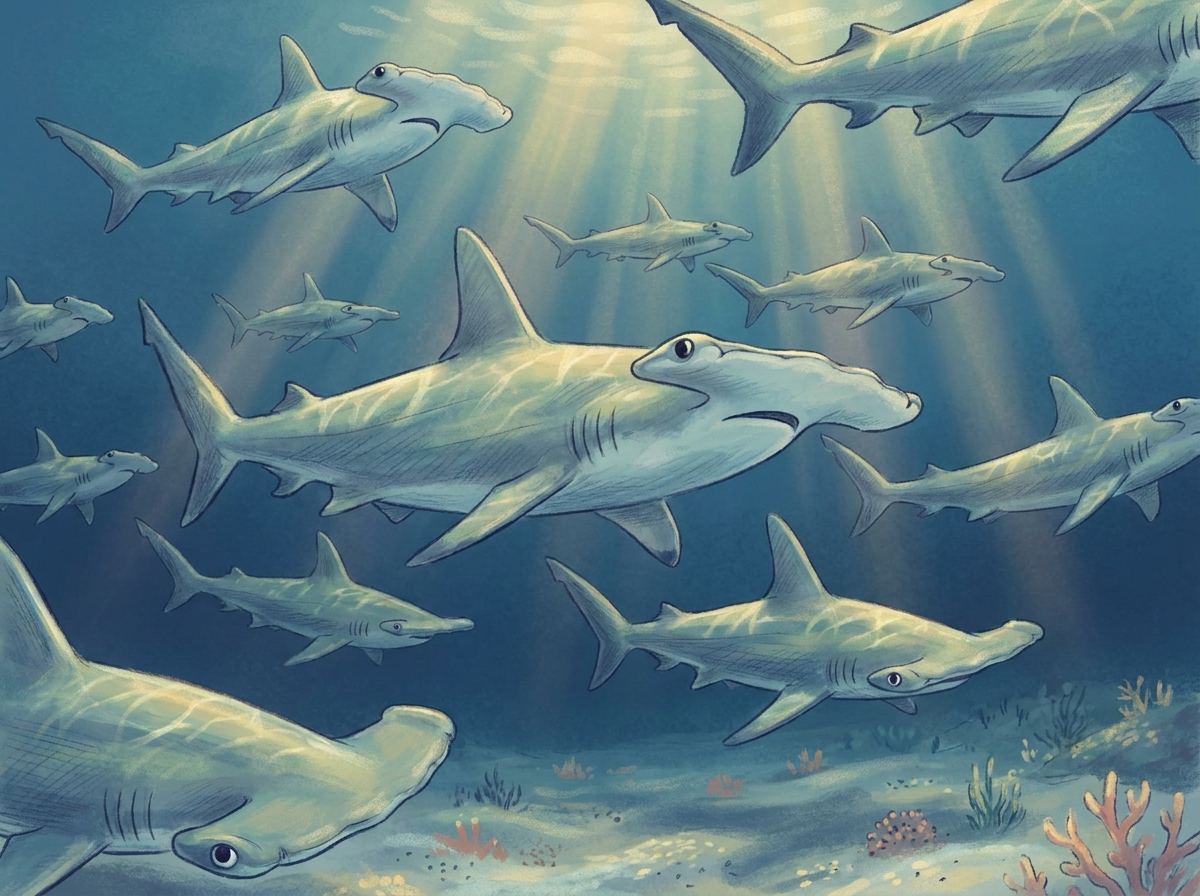
  • During the day, scalloped hammerheads gather in big groups called schools, sometimes 100 sharks or more!
  • Famous school spots are near ocean islands like the GalΓ‘pagos and Cocos Island.
  • At night, the school splits up and each shark goes off to hunt on its own.
  • Some hammerheads also travel long distances in summer, looking for cooler water.
A school of scalloped hammerhead sharks swimming together in blue water
A real school of hammerheads in Japan Real photo
Illustration of a large school of hammerhead sharks swimming underwater with sunbeams above
Swimming together AI picture

🧽 The shark car wash

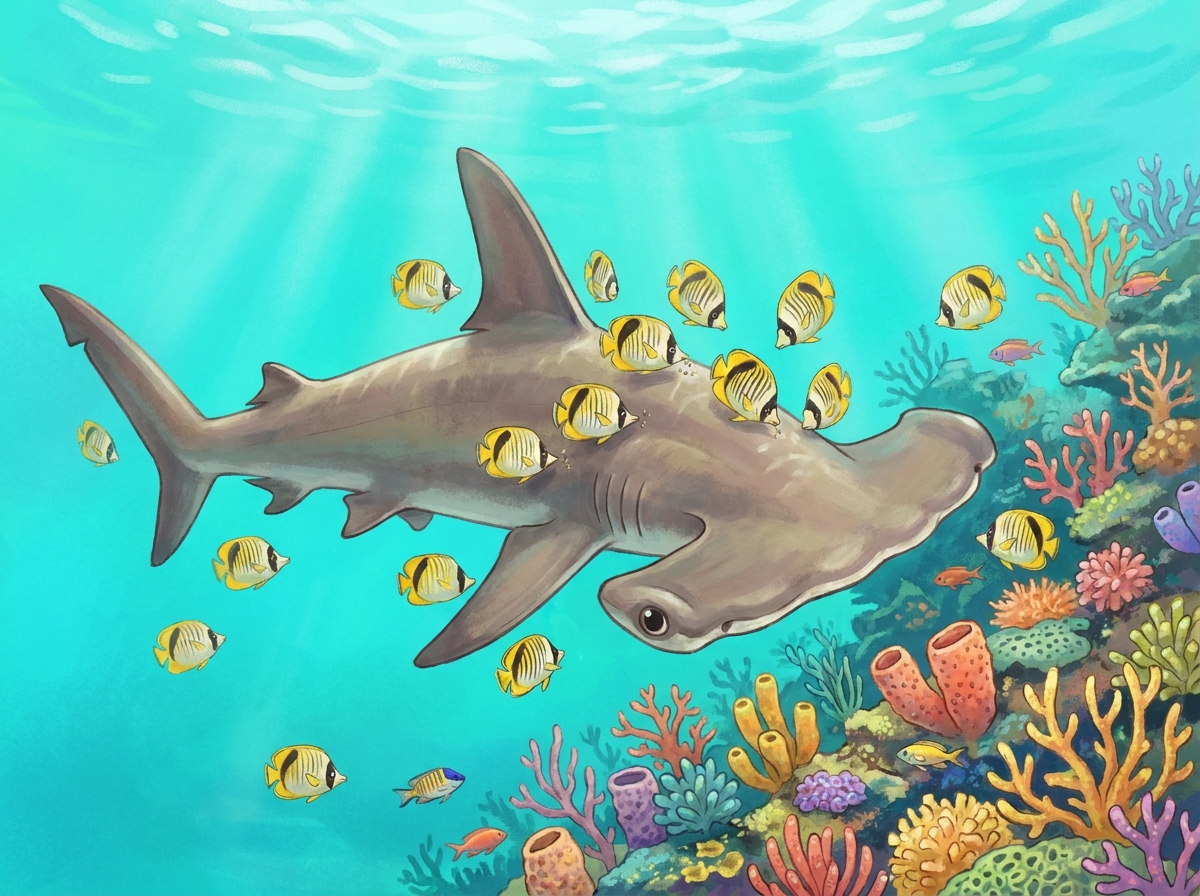
Sharks can get tiny pests stuck to their skin. So hammerheads visit special spots on the reef called cleaning stations.

The shark slows down, and little fish like butterflyfish swim right up and nibble the pests off. The shark gets clean, and the little fish get a snack. Everybody wins! πŸŽ‰

Illustration of small yellow butterflyfish cleaning a hammerhead shark at a coral reef
Getting cleaned at the reef AI picture

🍼 Hammerhead pups

  • Hammerheads don't lay eggs. Their babies, called pups, are born alive.
  • A great hammerhead mom can have anywhere from 6 to 42 pups at a time.
  • Newborn pups are about 2 feet long, and their heads are softer and more rounded than their parents'.
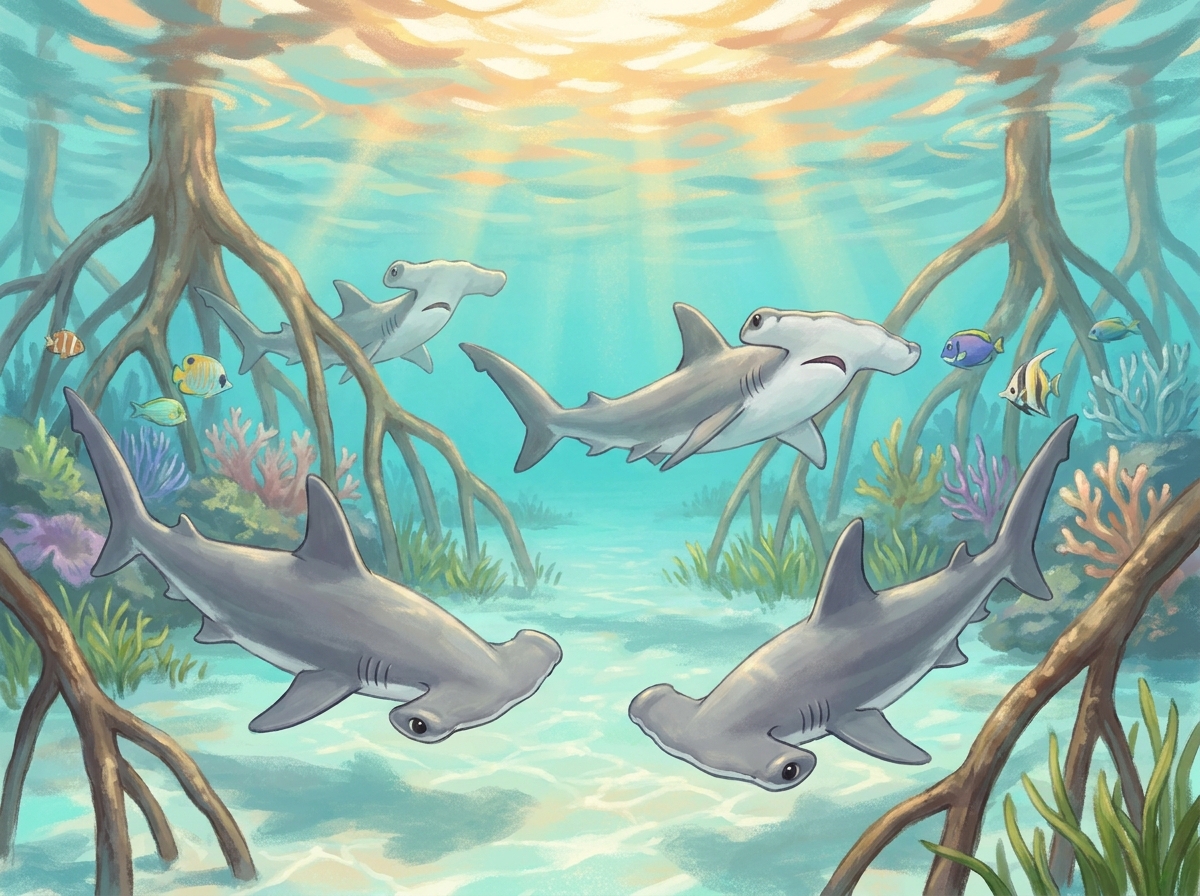
  • Pups grow up in warm, shallow nurseries like bays and mangrove lagoons, where it's easier to hide from big fish.
  • From the day they're born, hammerhead pups take care of themselves.
Illustration of baby hammerhead sharks swimming among mangrove roots in a shallow lagoon
A mangrove nursery AI picture

🍽️ What do hammerheads eat?

🐟

Fish of all kinds.

πŸ¦‘

Squid, crabs and lobsters.

🌊

Stingrays are a great hammerhead's favorite. It uses its head to keep a stingray still on the sand.

🌱

Bonnetheads also eat seagrass! Sometimes about half their food is plants.

Scientists were amazed to learn that bonnetheads can actually digest seagrass. They're the first sharks known to be omnivores, which means they eat both animals and plants!

πŸ₯— The shark that eats salad

The little bonnethead lives in shallow, sunny water full of seagrass meadows. While it hunts for crabs and shrimp, it swallows lots of seagrass too.

For a long time, people thought that was an accident. But in 2018, scientists found that bonnetheads really do digest and use the seagrass, like a shark-sized salad! πŸ₯—

πŸ€” Think about it: Most sharks only eat meat. Why might eating plants be helpful for a shark that lives in a seagrass meadow?
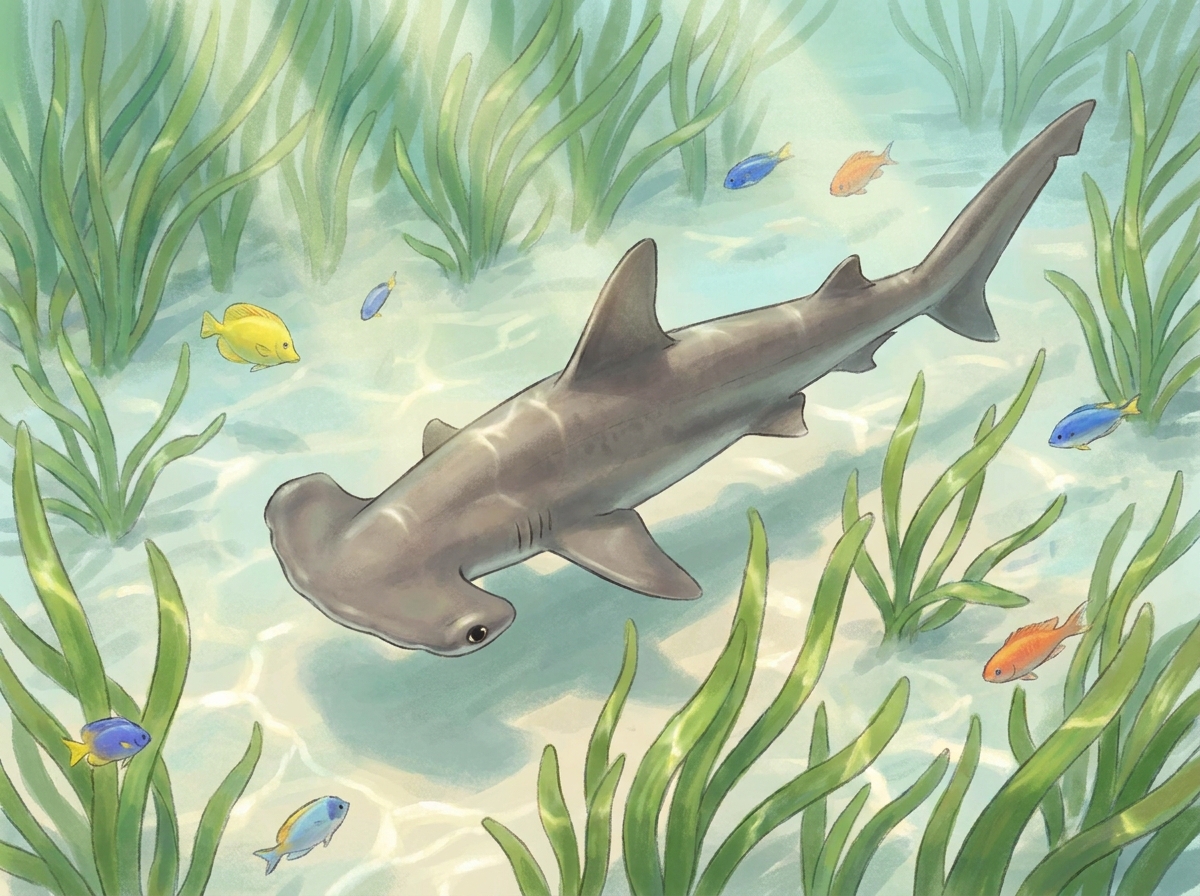
Illustration of a bonnethead shark with a rounded shovel-shaped head swimming through green seagrass
A bonnethead in the seagrass AI picture

❓ The Hammerhead Quiz

How much do you know? Answer the questions one at a time.

πŸ§™ Ask the Animal Wizard

The Animal Wizard knows all about hammerheads. Type a question and press Ask! Curious about a different animal?

You can ask up to 10 questions in a chat.

The Animal Wizard uses AI, so it can make mistakes. If something sounds surprising, check with a grown-up!

🎬 Hammerhead videos

Watch these with a grown-up. They open on YouTube.

πŸ’š How can we help hammerheads?

Great and scalloped hammerheads are endangered. Many get caught in fishing nets by accident, and too many are taken from the ocean.

Good news: Places like the GalΓ‘pagos protect huge areas of ocean where hammerheads can swim safely! πŸŽ‰

And don't worry: hammerheads are shy around people, and bites are very, very rare. Sharks aren't monsters. They help keep the ocean healthy!

  • πŸ“š Learn and share: tell someone a cool hammerhead fact, and that sharks aren't scary monsters.
  • πŸ–οΈ Keep beaches clean: pick up trash so it doesn't wash into the ocean.
  • 🐠 Visit an aquarium that helps protect sharks.
  • 🌊 Be ocean-smart: at the beach, swim where lifeguards say it's safe, and enjoy wild animals from a distance.
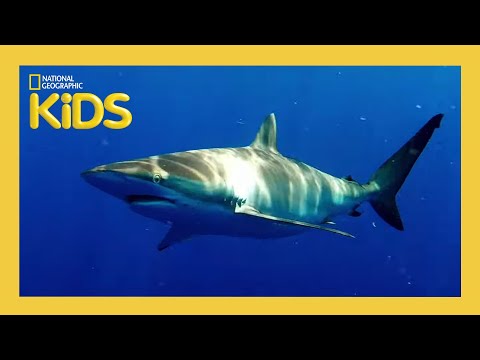
A scalloped hammerhead shark swimming in blue water near Cocos Island
A wild scalloped hammerhead Real photo